There is a particular kind of morning hunger that arrives around ten o'clock, sharp and distracting, long before lunch is a sensible option. Most of the time it has nothing to do with willpower and everything to do with what was on the plate at seven. A slice of white toast and a coffee will get you upright, but they burn through fast, and the dip that follows sends you hunting for a biscuit and a second cup. A breakfast that actually holds is built differently. It is not bigger, exactly, and it is not more complicated — it simply leans on foods that release their energy slowly and keep hunger quiet for longer. Get the shape of it right and the mid-morning crash more or less disappears, taking the biscuit tin with it.
The three things that make breakfast last
You can forget calorie counting and remember three words: protein, fibre, fat. Together they slow digestion, steady the rise and fall of your energy, and tell your body it has been properly fed.
- Protein is the one most breakfasts skip. Eggs, yoghurt, cottage cheese, beans, or milk in your oats all count. It is the single biggest reason a breakfast keeps you full.
- Fibre comes from whole grains, fruit and vegetables. Oats, wholemeal bread, berries and a piece of fruit all slow things down and keep the gut happy.
- A little fat — a spoon of nut butter, a few seeds, half an avocado, the yolk of an egg — rounds out the meal and helps the fullness stretch further.
Notice that none of this is exotic. It is the ordinary contents of most kitchens, arranged so the plate does more than the sum of its parts.
Everyday combinations that work
Here are a few that hit all three without any fuss. Pick the one that suits your morning and your kitchen:
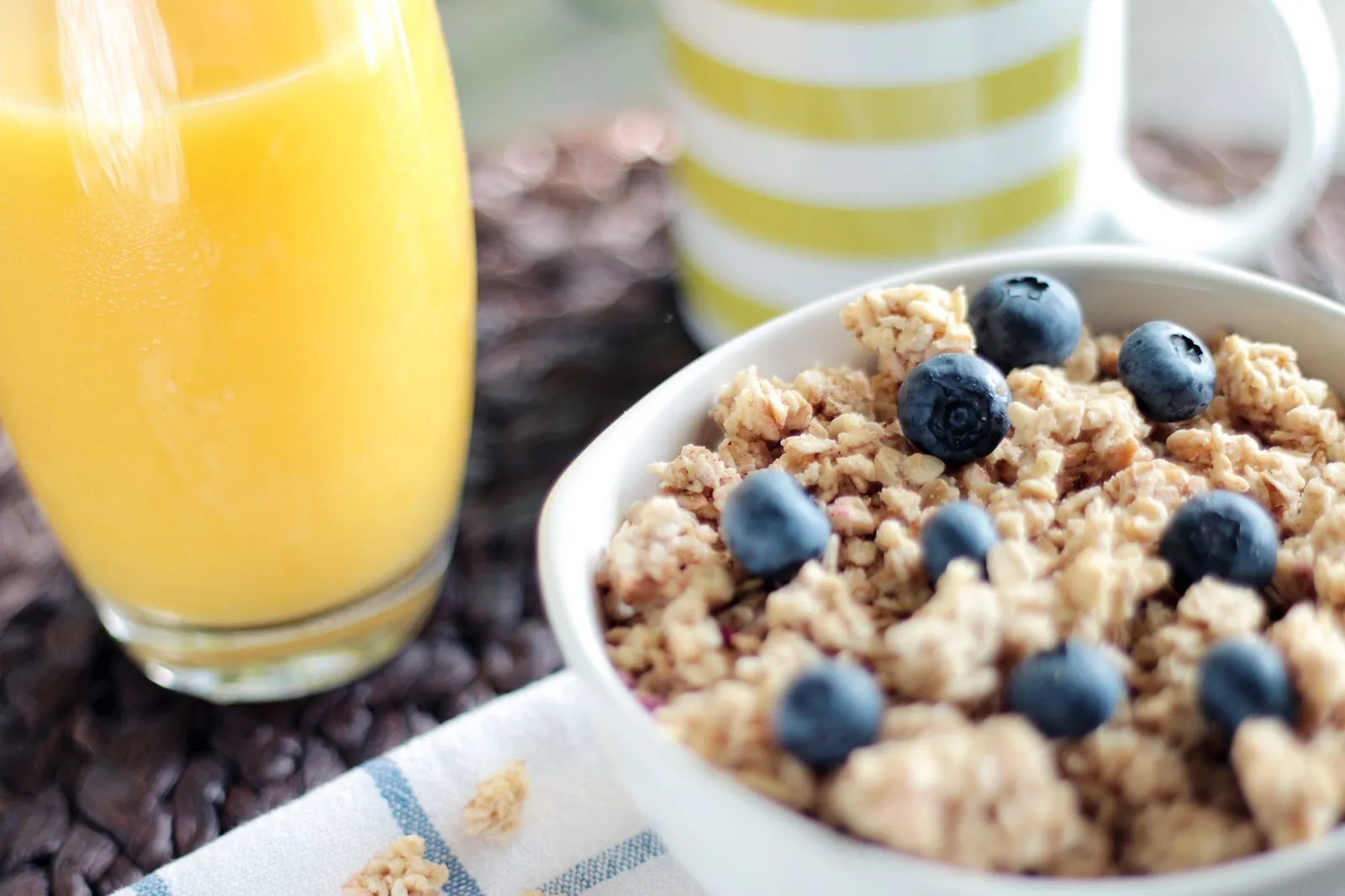
- Oats with milk or yoghurt, berries and a spoon of nut butter. Warm or overnight, it ticks every box and takes minutes.
- Eggs on wholemeal toast with a tomato or a handful of spinach. The classic for a reason — protein, fibre and staying power on one plate.
- Cottage cheese or thick yoghurt with fruit and seeds. No cooking, plenty of protein, and it travels if you are in a rush.
- Beans on toast. Humble, cheap and genuinely filling — beans bring both protein and fibre in one go.
If your usual breakfast is cereal, you do not have to abandon it. Choose a less sugary one, use milk or yoghurt rather than water, and drop a handful of berries and some nuts on top. The same bowl, quietly upgraded, behaves completely differently by mid-morning.
What about the busy mornings?
Not every day has room for a sit-down plate, and that is fine. The trick is to prepare when you can. Overnight oats made the evening before, a tub of yoghurt with fruit ready in the fridge, or a couple of hard-boiled eggs waiting to be grabbed all give you a proper breakfast with no morning effort. Even a wholegrain roll with cheese eaten on the move beats a pastry that leaves you hungry an hour later. The goal is not a perfect meal; it is a decent one that keeps the crash away.
Give your usual breakfast a nudge
You do not need to overhaul the whole meal to feel the difference. Start by adding protein to what you already like, then see whether the morning changes. A breakfast built on slow-release foods does something quietly generous: it hands you a level, unbothered morning, free of the sudden slump and the hunt for a quick fix. That steadiness is worth more than any single "superfood," and it is entirely within reach of an ordinary kitchen and five spare minutes.
← Back to all articles